Why Did Changent Need a New Approach to Health Equity Data?
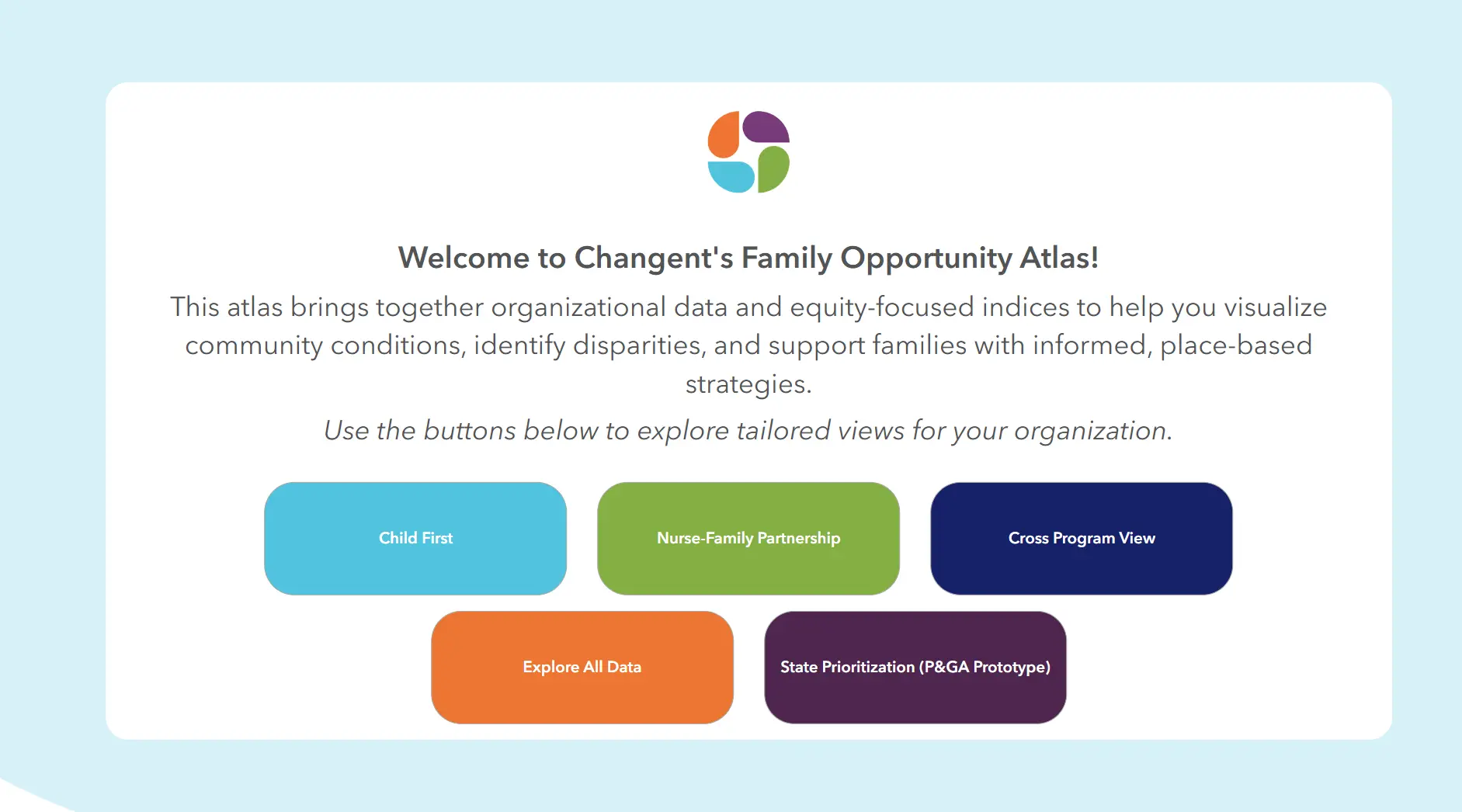
Changent works at the intersection of health equity, community development, and data-informed practice. Their programs span maternal and child health, mental health care, and coordinated community support, and their staff and partners rely on data to understand where services are most needed and where outcomes fall short. The challenge was not a shortage of data. It was making that data genuinely usable for a broad audience, including staff members who may not have GIS backgrounds, implementing partners reviewing program performance, and users with visual or cognitive accessibility needs.
Changent wanted a platform that would bring together national service area data and multiple health equity indicators in one place, while prioritizing clarity and inclusivity from the start. That meant more than a functional map. It meant thoughtful decisions about language, color, symbology, narrative structure, and the tools used to present geographic patterns to non-specialist audiences.
How Did Dymaptic Design the Family Opportunity Atlas for Accessibility?
When Changent brought dymaptic into the project, accessibility was already central to their vision, not a feature to add at the end. Our team approached the build with that framing intact. Before any development began, we worked with Changent to understand the audiences the FOA would need to serve: internal analysts, partner organizations, and users who rely on assistive technology. That understanding shaped every technical decision that followed.
Our approach prioritized accessibility at two levels. The first was visual and structural: color choices, symbology, contrast ratios, and the narrative structure of the companion StoryMap were all considered for clarity across a diverse user base. The second was descriptive accessibility: ensuring that users who cannot interpret a map visually could still understand its content. This is where dymaptic’s Accessible Map Agent came in, providing AI-generated, screen-reader-friendly descriptions of spatial patterns directly within the platform.
What Did Dymaptic Build for Changent’s Family Opportunity Atlas?
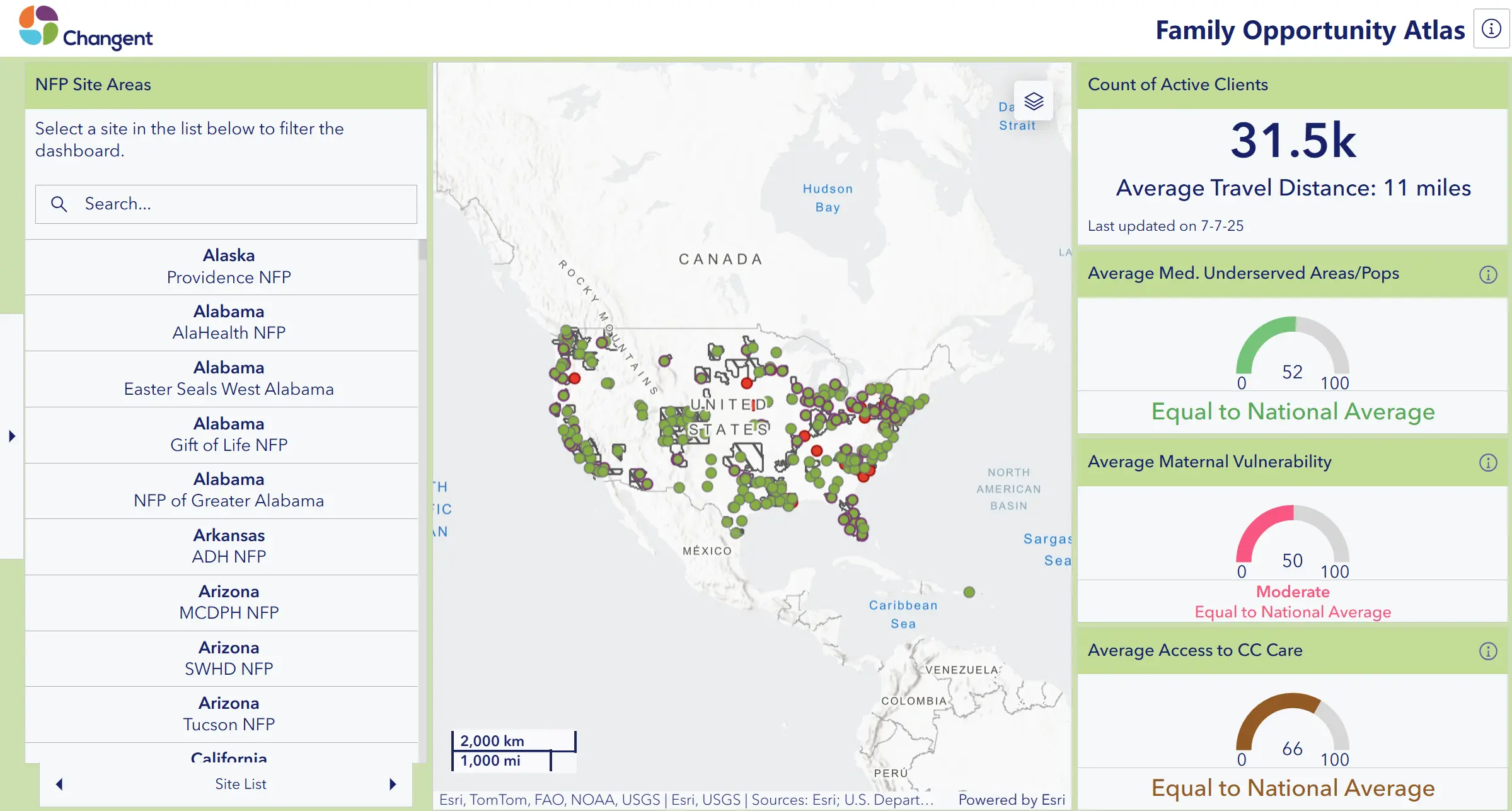
The Family Opportunity Atlas is an ArcGIS Online application that brings together Changent’s national program service area data and a curated set of health equity indicators. Users can explore geographic patterns, identify areas of high need, and understand where program coverage aligns or diverges with community conditions. A companion ArcGIS StoryMap provides narrative context, explaining the purpose of the FOA and guiding users through how to interpret and use the data effectively.
The dymaptic team built the platform end to end. Key technical contributions included:
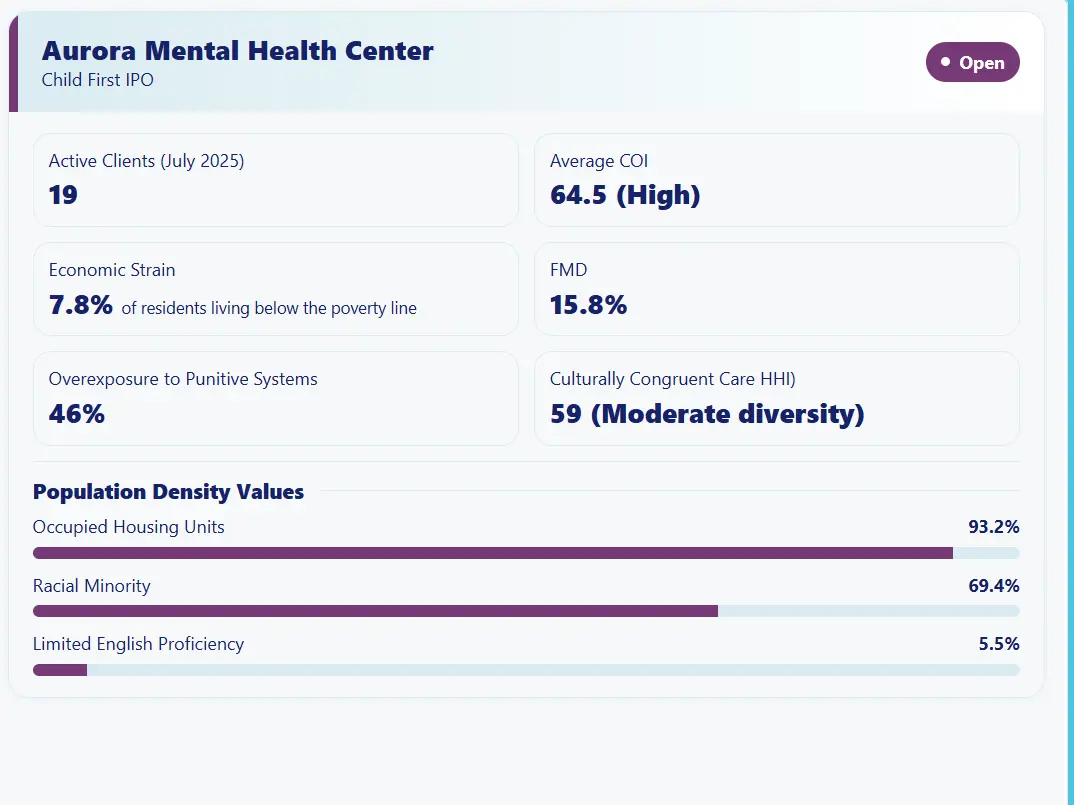
- Custom HTML and Arcade pop-ups designed to present layered data clearly without overwhelming users unfamiliar with GIS conventions
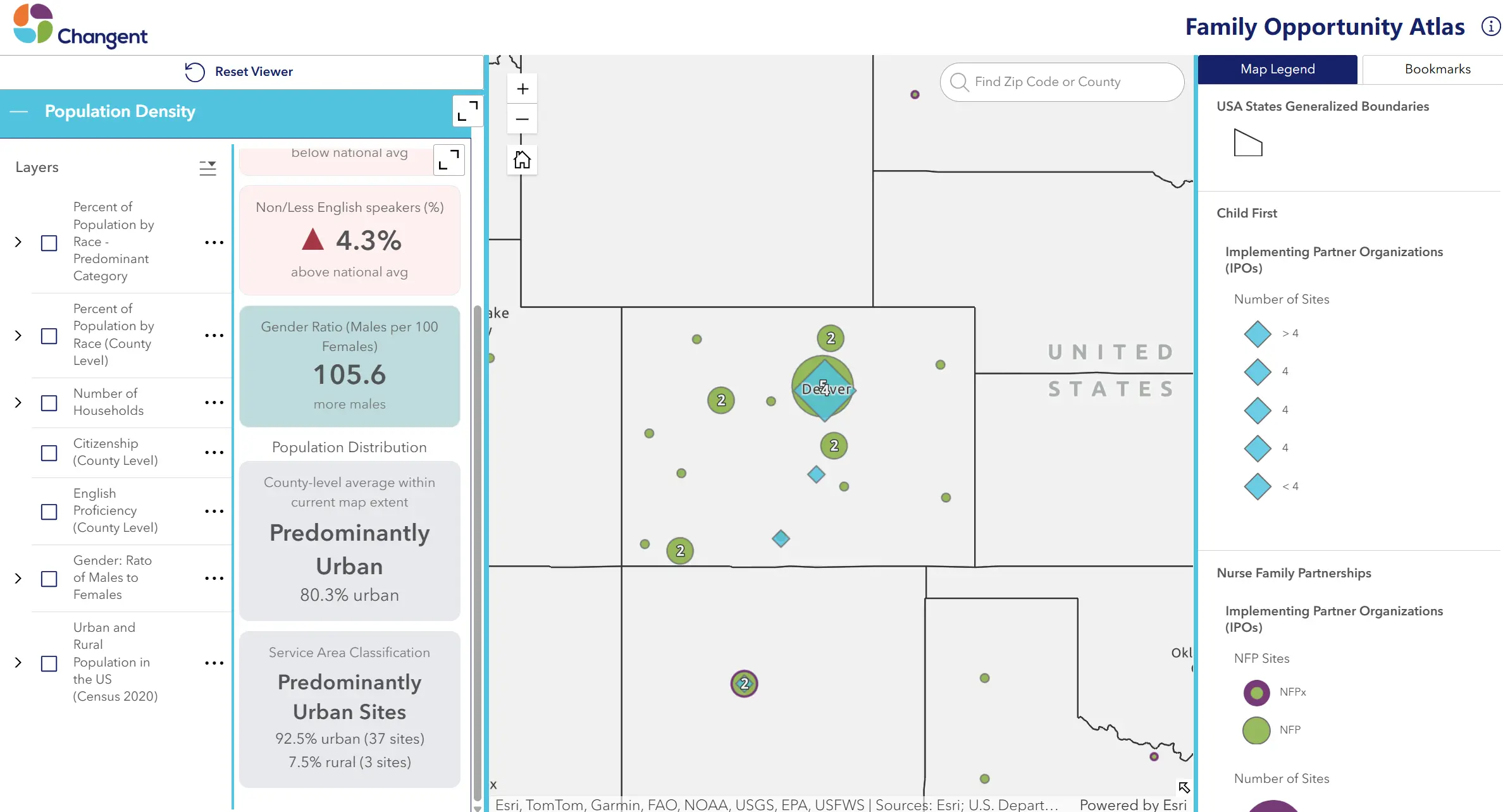
- ArcGIS Experience Builder and ArcGIS Dashboards with Arcade expressions for dynamic data display and filtering
- A Python opportunity scoring index to surface geographic areas with the greatest opportunity for program expansion or intervention, based on health equity indicators
- A Python publishing pipeline to automate the publication and update of spatial layers within the ArcGIS Online environment
- Accessible Map Agent integration: dymaptic’s AI-powered accessibility tool at accessibility.dymaptic.ai generates comprehensive, screen-reader-friendly alternative text for ArcGIS web maps
What Are the Results of the Family Opportunity Atlas?
The Family Opportunity Atlas launched in December 2025 and is currently in use by Changent staff and implementing partners for internal validation. This phase is focused on testing the platform’s ability to surface meaningful patterns, gathering user feedback, and refining the experience before broader rollout.
Phase 2 of the project will extend the FOA’s reach to a wider audience and put the platform to work on two specific operational questions: identifying facilities at risk of closure due to resource strain, and spotting geographic opportunities to expand program reach where health equity indicators signal the greatest need. The opportunity scoring index built by dymaptic is designed specifically to support that analysis.
As Changent’s Director of Health Equity, Claire Colangelo, put it: the FOA challenged the team to reimagine how complex spatial data is presented and communicated to ensure it would be inclusive, clear, and capable of sparking insight, dialogue, and meaningful change.